Hello, this is Ansan Mind Dental Clinic. In short, bad breath is rarely caused by brushing frequency alone. Factors such as tongue coating, trapped food between teeth, gum inflammation, old restorations, and dry mouth all contribute. If halitosis recurs, it’s better to identify likely sources step by step rather than only masking the symptom.
Why does breath smell even after brushing?
If you still notice an odor after brushing, check the areas a toothbrush does not reach. Oral malodor typically comes from bacterial breakdown of food debris and proteins. Common reservoirs include the posterior tongue, interproximal spaces, subgingival areas, and margins around older crowns or bridges. Morning breath often worsens because saliva flow decreases overnight, but persistent daytime odor may point to gum disease, tongue coating, decay, problematic prosthetics, or non-oral causes.

What to check at home: a practical checklist
- Tongue surface: white or yellow coating with odor — try gentle tongue cleaning once or twice daily.
- Between teeth: odor on flossing — use floss or interdental brushes to remove trapped debris.
- Gum margin: bleeding or swelling during brushing with accompanying odor — consider professional periodontal evaluation and scaling.
- Around restorations: food impaction near crowns/bridges — have the fit and secondary decay assessed by a clinician.
- Dry mouth: persistent dryness or severe morning breath — increase hydration and review possible causes.
How to manage tongue coating and interdental spaces
Tongue care
- Use a tongue scraper or a soft tool to gently sweep from the back toward the front. Avoid aggressive scraping to prevent irritation or gagging.
- Clean once or twice daily, especially after waking.
Interdental cleaning
- Choose floss for tight contacts and an interdental brush where spaces are larger or around prostheses.
- If you are unsure about sizes or techniques, ask your dentist for guidance to avoid injuring the gums.
Are mouthwashes safe to use every day?
Mouth rinses can help temporarily reduce odor but do not replace mechanical removal of plaque, food particles, and calculus. Suitability depends on the product’s ingredients and your oral condition. Alcohol-containing formulations may increase dryness for some people, and medicated rinses should be used according to purpose and duration. For persistent halitosis, identify the primary source—tongue, gums, restorations—before relying on a rinse alone.
Can scaling eliminate bad breath completely?
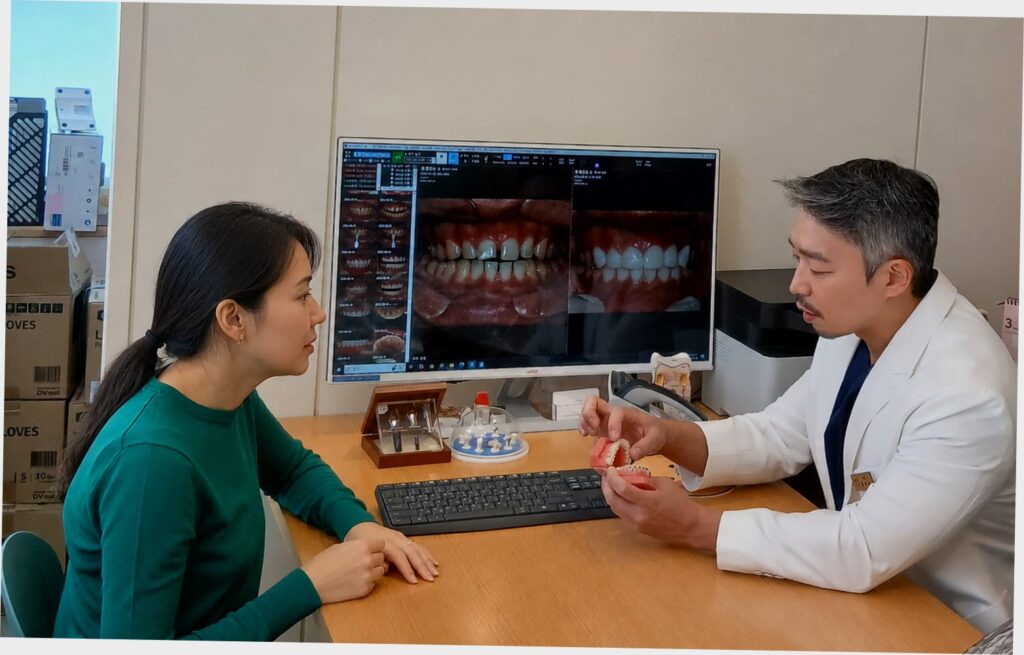
Professional scaling reduces calculus and bacterial load, which often improves breath related to periodontal problems. However, if halitosis persists after scaling, consider other causes such as tongue coating, deep periodontal pockets, decay, ill-fitting restorations, wisdom tooth area inflammation, or salivary insufficiency. If a specific interdental site smells after flossing, that spot should be examined for decay or periodontal issues. A clinical exam is necessary for accurate diagnosis.
Daily routine: a simple, repeatable plan
- Morning: drink a glass of water, check tongue coating, and brush gently.
- After lunch: rinse and use floss or a portable interdental brush if needed.
- Evening: thorough interdental cleaning, brushing, and tongue care before sleep when saliva flow decreases.
- Habit review: monitor hydration, smoking, alcohol, and mouth-breathing, as these affect oral dryness, staining, and odor.
When should you see a dentist?
Consider a dental visit if:
- Bad breath lasts more than two weeks despite home care.
- Odor returns soon after brushing or is noted by others.
- Flossing reveals a particularly foul-smelling site.
- Gums bleed or remain swollen, or food frequently lodges around crowns or bridges.
Persistent halitosis can sometimes be managed with lifestyle changes, but it can also indicate periodontal disease or prosthetic problems that require clinical treatment. A targeted examination helps determine if scaling, restoration adjustment, or other interventions are needed.