
Many people think a cavity becomes a problem only after it starts to hurt. However, in actual dental consultations, cavities are often found to have progressed deeper inside the tooth even when there is little or no pain. At first, there may only be mild sensitivity to cold foods or drinks. As time passes, pain may occur while chewing. If the cavity becomes deeper, the tooth may ache even without stimulation, and the pain may become stronger at night.
The key point is not whether the pain is still bearable. What matters more is how far the cavity has progressed inside the tooth. During cavity consultations in Ansan Gojan-dong, patients often ask, “Can I wait a little longer if I can still tolerate it?” or “Is it okay if there is no pain?” However, the absence of pain does not always mean that the cavity has stopped progressing.

Why does cavity pain feel different at each stage?
Cavity pain can vary depending on how deep the decay has reached. A tooth is made up of the outer enamel layer, the inner dentin layer, and the nerve tissue at the center. When a cavity is limited to the enamel, there may be almost no symptoms or only very mild sensitivity.
Once the cavity reaches the dentin, the tooth may become sensitive to cold or sweet foods. If the decay progresses further, pain may occur when chewing. If the pain remains even after the stimulus is gone, or if throbbing becomes worse when lying down at night, the condition of the nerve may need to be checked.
Early cavities may only be found during a dental checkup. On the other hand, if sensitivity repeats, food frequently gets trapped, or chewing on a specific tooth becomes uncomfortable, the depth and extent of the cavity should be evaluated.

What can happen if a cavity is left untreated?
Leaving a cavity untreated may lead to more than just stronger pain. A cavity that could have been restored with a small filling may progress deeper and require a wider treatment range. In some cases, root canal treatment or a crown may need to be considered.
Even if the surface looks like a small dark spot, the dentin inside may already be widely damaged. In this condition, part of the tooth can break while chewing hard food. The risk of tooth fracture from an untreated cavity cannot be judged only by the visible size of the hole, so a dental examination and radiographic evaluation may be needed.
If the tooth surface looks dark or feels rough, if food frequently gets trapped, or if sensitivity keeps recurring, it may not be a simple stain. When the tooth structure becomes weakened, cracks or partial fractures may occur, and the treatment range may need to be checked.
What signs suggest that the cavity may be close to the nerve?
Signs that a cavity may have progressed near the nerve are often different from simple sensitivity. If the tooth is briefly sensitive to cold water but the sensation disappears quickly, it may not always indicate nerve involvement. However, if the pain remains after the stimulus is gone, or if the tooth throbs without any stimulation, the nerve condition should be evaluated.
Pain that worsens at night, sensitivity to hot foods, repeated pain even after taking pain medication, gum swelling, odor around a specific tooth, or repeated food impaction may suggest that the area around the root also needs to be checked.
Still, these symptoms do not mean that everyone needs the same treatment. The stages of cavity pain can differ from person to person. Tooth cracks or gum inflammation may also be involved, so the decision should be made after a direct dental examination.

When should you visit the dentist?
The timing for a dental visit should not be based only on unbearable pain. It is better to seek evaluation when abnormal signs are repeated. Even if the pain is mild, repeated sensitivity in the same area, frequent food trapping, visible dark spots, or a growing defect should not be ignored.
Some patients with cavities in Ansan Gojan-dong say they want to wait a little longer because the pain is still tolerable. However, mild pain does not always mean that the cavity is shallow. Likewise, severe pain does not always mean that root canal treatment is required. The important point is to avoid judging the condition by symptoms alone and to check the actual state of the tooth.
If sensitivity continues for one to two weeks, if chewing on a specific tooth becomes difficult, if a dark or hollow area appears larger, if part of the tooth breaks or feels rough, or if nighttime pain and frequent use of pain medication occur, it is advisable to have the tooth examined.
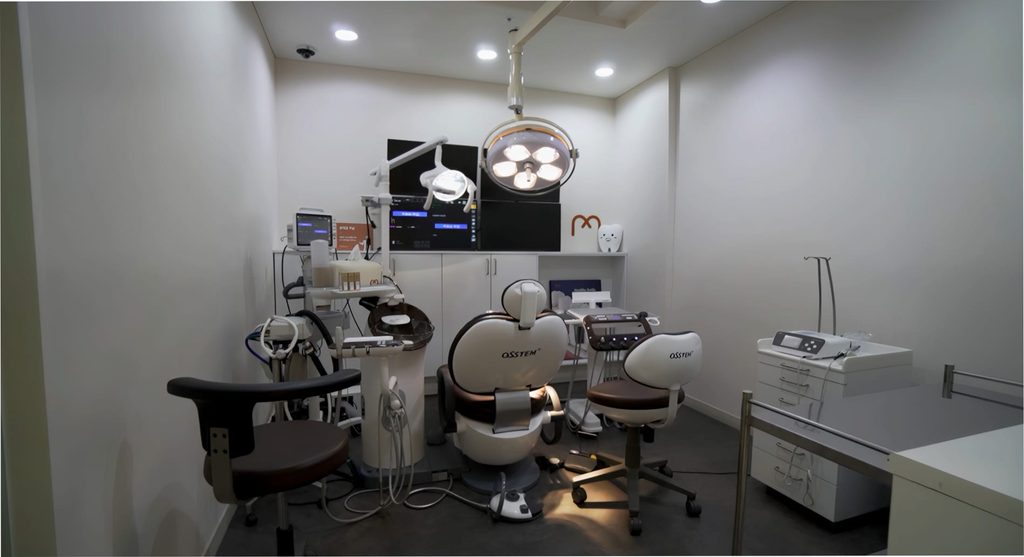
Cavities can progress even without pain
Cavities may continue to progress even when there is no pain. This is especially common with cavities between teeth or around old restorations, which may not be visible from the outside. If food frequently gets trapped or dental floss catches or breaks in the same area, it is better to check the cause rather than treating it as a minor inconvenience.
Delaying treatment may also lead to chewing mostly on the opposite side. If this habit continues, it may place additional pressure on nearby teeth or the jaw joint. Even small discomfort should be evaluated if it keeps recurring.
In the end, the important point is not whether cavity pain can be tolerated, but whether changes such as sensitivity, food trapping, chewing pain, nighttime pain, or tooth fracture are repeated.
An accurate diagnosis and treatment plan require evaluation by a dental professional.

Mind Dental Clinic Information
Mind Dental Clinic, located in Ansan, provides advanced dental treatments including dental implants and no-prep veneers.
Before starting any procedure, patients can receive a comprehensive evaluation of their current oral condition along with a clear explanation of the recommended treatment plan.
Location
4th Floor, Central Tower, 72 Gojan-ro, Danwon-gu, Ansan, South Korea
Phone
+82-31-401-9375
Website
Hours
Mon – Thu: 10:00 AM – 8:00 PM
Fri: 10:00 AM – 6:00 PM
Public Holidays: 10:00 AM – 4:00 PM