When using dental floss, you may sometimes experience unexpected discomfort. Your gums may bleed, floss may repeatedly break between certain teeth, the floss may not pass easily between the teeth, or your teeth may feel sensitive after flossing.
When this happens, it is easy to think, “Am I using dental floss incorrectly?” However, during an actual oral examination, other causes may also be identified, including gum inflammation, tartar, cavities between the teeth, or irregularities around the margins of dental restorations.
When providing advice about dental floss at Mind Dental Clinic, we explain that it is important not only to discuss how to use floss, but also to check where the problem repeatedly occurs, when it started, and whether there have been any changes around the gums and between the teeth.
Why Do My Gums Bleed When I Use Dental Floss?
If you have just started flossing or have not properly cleaned between your teeth for a long time, a small amount of bleeding may occur. When plaque has accumulated between the teeth and caused gum inflammation, even gentle stimulation can cause the gums to bleed.
Bleeding does not necessarily mean that you should stop flossing altogether. In fact, if cleaning between the teeth is discontinued, plaque may remain and gum inflammation may continue.
However, if any of the following situations occur, it is better not to assume that the bleeding is simply part of the adjustment process.
- Bleeding always occurs in the same area
- Your gums are swollen or painful
- Bleeding continues repeatedly
- Your symptoms become worse the more you floss
- Food repeatedly gets trapped between particular teeth
These symptoms may require an evaluation not only of your flossing technique but also of tartar, cavities between the teeth, or gum disease.
Why Does Dental Floss Keep Breaking?
If dental floss breaks once or twice, this does not necessarily mean there is a problem with your teeth. Floss can break depending on the type of product being used and how much force is applied.
However, if it repeatedly breaks between the same teeth, the situation may be different.
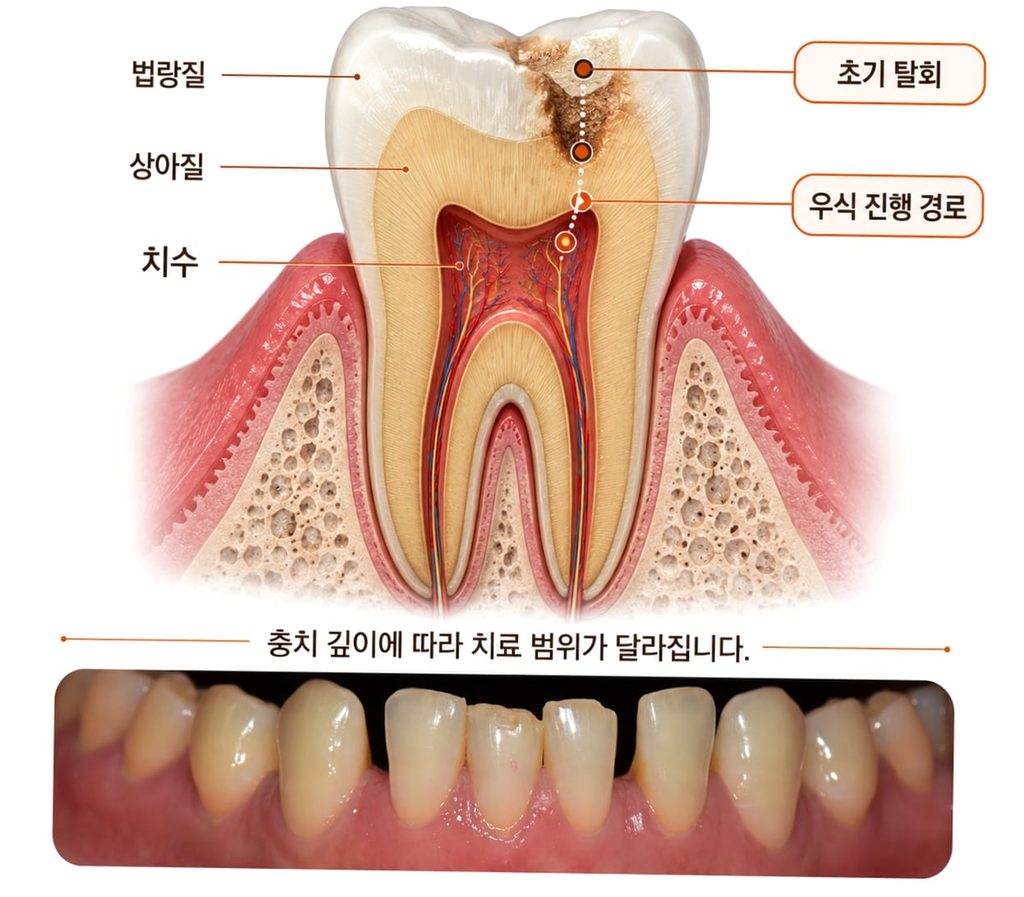
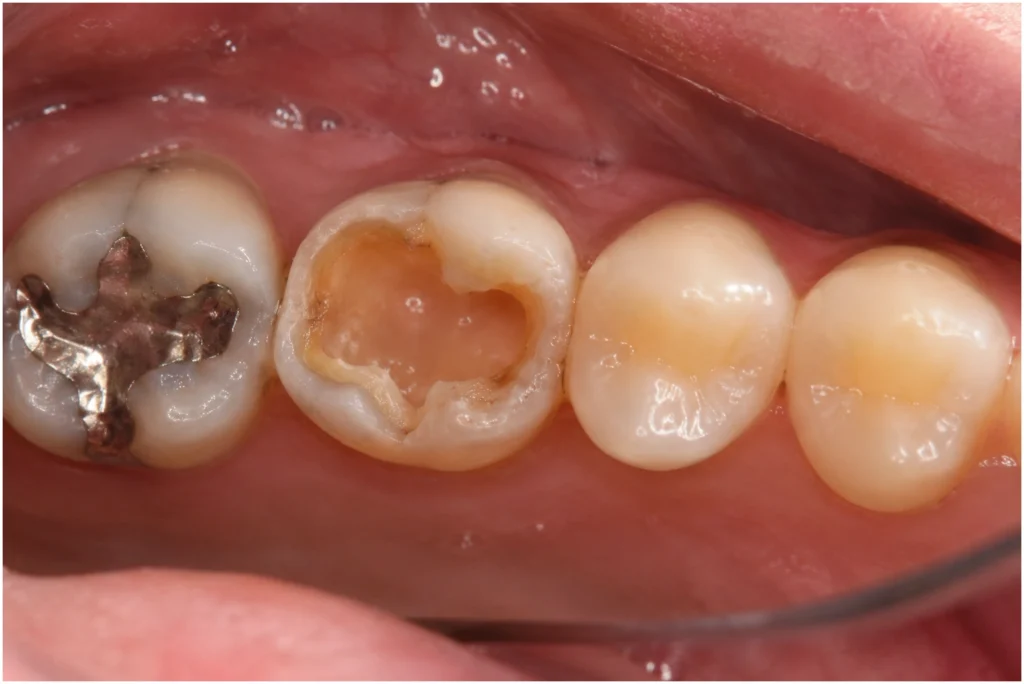
In the dental office, we may examine the area where the floss keeps breaking and check the shape and surface condition between the teeth. If a cavity between the teeth has developed, tartar has accumulated, or the margin of an older dental restoration is rough, the floss may repeatedly catch or tear.
In particular, if you say, “The floss works fine between my other teeth, but it keeps breaking in this one spot,” changing your flossing technique alone may not necessarily solve the problem.
Forcing Dental Floss Between Your Teeth Can Make Your Gums More Painful
If the space between your teeth is narrow, it is best to avoid forcefully pushing the floss straight down between the teeth.
When passing the floss through the contact point, gently guide it through with small movements. Once it is in place, curve the floss around the side of the tooth in a C-shape and move it along the tooth surface.
When removing the floss, gently pull it out toward the side rather than forcefully pulling it upward. This can help reduce unnecessary irritation to the gums.
Molars can be particularly difficult because visibility is limited, making it harder to control the angle and amount of force applied. If conventional floss is difficult to use, a floss holder or interdental brush may be more suitable depending on your oral condition.
What If the Floss Does Not Fit Between Certain Teeth?
If the floss does not pass easily between your teeth, it is not recommended to force it through.
The teeth may simply be closely positioned, but floss may also have difficulty passing through if there is significant tartar buildup, a narrow contact area around a restoration, or a structural issue between the teeth.
If the floss suddenly becomes more difficult to insert than before, or if it repeatedly gets stuck in only one area, it can be helpful to remember when the change began.
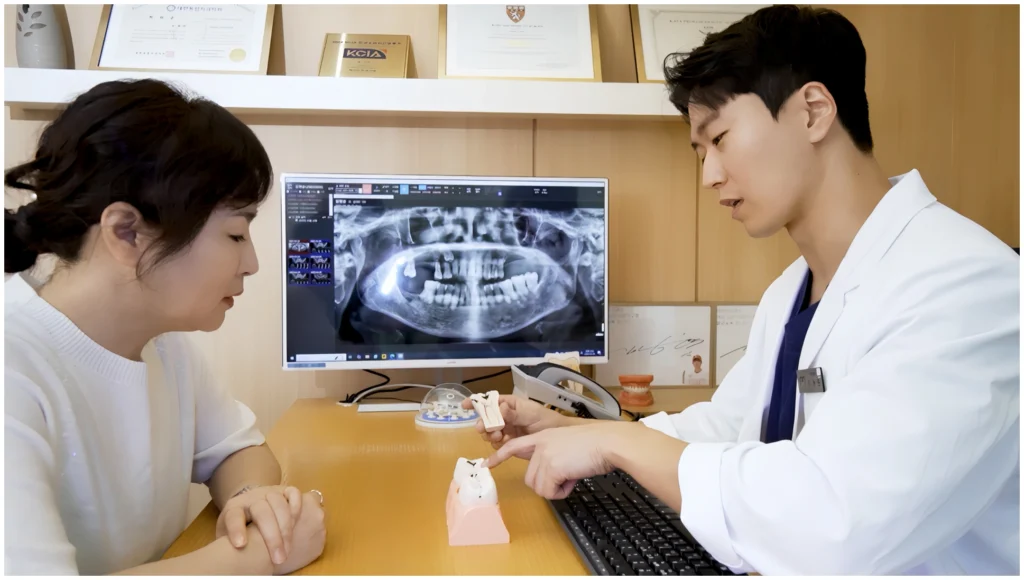
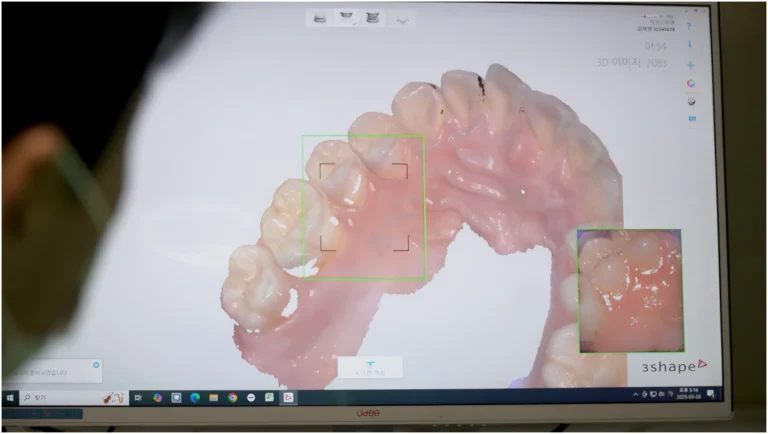
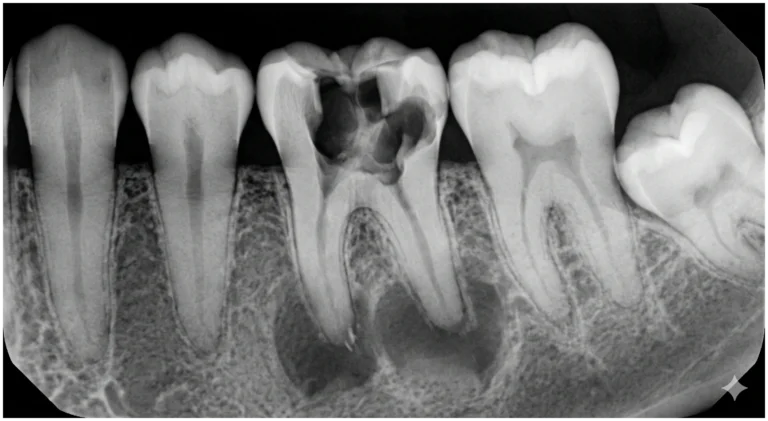
During an oral examination, the area between the teeth can be evaluated directly. When necessary, dental X-rays may also be used to examine areas that are difficult to see with the naked eye.
Why Do My Teeth Feel Sensitive After Flossing?
When someone says, “My teeth feel sensitive after I floss,” it can be difficult to identify a single cause.
Sensitivity can occur when the gums have receded and exposed the tooth root, when the tooth has become sensitive due to wear, or when a cavity is present between the teeth.
Therefore, what matters is where the sensitivity occurs, how often it occurs, and what type of stimulus triggers it.
For example, if one particular tooth repeatedly becomes sensitive to cold foods or drinks, that tooth may need to be examined more closely. On the other hand, if several teeth are generally sensitive, lifestyle factors such as brushing pressure, consumption of acidic beverages, or tooth wear may also need to be considered.
How Many Times a Day Should You Floss?
In oral hygiene, consistency and proper technique are more important than simply counting how many times you floss.
In general, making it a habit to thoroughly clean between your teeth once a day is a practical approach. Many people find it helpful to clean between their teeth with dental floss or an interdental brush before brushing their teeth at night.
However, people who wear orthodontic appliances, have multiple dental restorations, or frequently get food trapped between their teeth may need additional care depending on their individual oral condition.
There is also no need to insist on using dental floss exclusively. Depending on the size and shape of the spaces between your teeth, floss may be suitable for some areas while an interdental brush may be more convenient for others.
In These Cases, Identifying the Cause May Be More Important Than Changing Your Flossing Technique
If the following symptoms continue to occur, it may be better to have your teeth and gums evaluated rather than simply purchasing a different flossing product.
| Symptom | Possible reason for evaluation |
|---|---|
| Repeated bleeding in the same area | Gum inflammation, tartar, etc. |
| Floss repeatedly breaks in a specific area | Cavities between the teeth, rough surfaces, restoration margins, etc. |
| Food repeatedly gets trapped between particular teeth | Changes in the contact between the teeth, etc. |
| Only one particular tooth becomes sensitive after flossing | Gum recession, hypersensitivity, cavities, etc. |
| Gum bleeding accompanied by swelling or pain | Evaluation for gum inflammation or other conditions |
Of course, these symptoms alone cannot confirm a specific dental condition. The actual cause should be determined through an oral examination.

What We Pay Attention to in the Dental Office Is the “Repeated Location”
One of the most useful pieces of information during a consultation about dental floss is the location where the symptoms repeatedly occur.
For example, if the floss breaks every time between the same molars and bleeding also occurs, it is better not to simply assume, “I must be using the floss incorrectly.” That particular area should be examined separately.
On the other hand, if you experienced a small amount of bleeding when you first started flossing and the bleeding gradually decreased as you continued using the correct technique, it may be part of the process of improving your gum health.
Therefore, when evaluating problems associated with dental floss, it is important to consider not just a single episode of bleeding or a single instance of floss breaking, but also whether the problem keeps happening and how the symptoms change over time.

You Do Not Necessarily Have to Stop Flossing Completely
Stopping all cleaning between the teeth simply because your gums bleed when flossing may not be the best approach.
However, you should also avoid repeatedly irritating the bleeding area or forcing the floss between your teeth. Use a gentle technique, monitor how the symptoms change, and if repeated bleeding or pain occurs, consider having the cause evaluated.
Dental floss is a useful tool for managing plaque and food debris between the teeth, but it cannot solve every oral health problem.
In particular, if the floss keeps breaking or cannot pass through a particular area, it is important to check not only your flossing technique but also whether there have been changes in the teeth or gums themselves.
Frequently Asked Questions
Q1. If my gums bleed when I floss, should I continue using dental floss?
A small amount of bleeding can occur when you first start flossing or when your gums are inflamed. You can continue gently using the correct technique and monitor whether the bleeding decreases. However, if the bleeding continues repeatedly or is accompanied by swelling or pain, a dental examination is recommended.
Q2. If my dental floss keeps breaking, does that mean I have a cavity?
Not necessarily. The problem may be related to the type of floss or the way it is being used. However, if the floss repeatedly breaks in exactly the same area, it may be necessary to check for cavities between the teeth, tartar, irregular restoration margins, or other changes in that area.
Q3. What should I do if the floss will not fit between my teeth?
Avoid forcing it through. You may try thinner floss or another oral hygiene tool, but if the floss repeatedly becomes stuck in a particular area, it is advisable to have the condition between those teeth examined.
Q4. Why do my teeth feel sensitive when I use dental floss?
The floss itself may not have damaged your teeth. Existing conditions such as gum recession, tooth hypersensitivity, tooth wear, or cavities between the teeth may become stimulated during flossing and cause sensitivity. If the sensitivity repeatedly occurs in a specific area, a dental examination is recommended.
Q5. How many times a day should I floss?
In general, flossing once a day consistently is a practical approach. More important than the number of times you floss is cleaning between your teeth properly without damaging or excessively irritating the gums.
Dental floss is not simply a tool for removing food. It is one of the methods used to maintain oral hygiene between the teeth. Therefore, rather than automatically stopping flossing because bleeding or breakage occurs, it is helpful to observe where the problem occurs, how often it happens, and under what circumstances it develops.
If the symptoms continue or become worse, rather than trying to determine the cause based solely on information found online, having the actual condition of your teeth and gums examined can help identify the underlying cause more accurately.