One of the questions patients are most curious about when considering inlay treatment is, surprisingly, not the treatment method itself but “Do I need to have the treatment right away?”
“Do I need cavity treatment even though I don’t have any pain?”
“My inlay fell out. How long can I leave it?”
“The tooth that was treated with an inlay is still sensitive. Is that normal?”
Hello, this is Mind Dental Clinic.
As we hear these questions frequently in the clinic, we often find that symptoms affecting the teeth cannot be evaluated simply by how severe the pain feels. In particular, teeth that have received inlay treatment may appear normal on the outside, while subtle changes such as discomfort when chewing, sensitivity, or food getting stuck may appear first.
Today, we will discuss the symptoms that are commonly checked before and after inlay treatment at a dental clinic in Ansan Seonbu-dong, and when it may be worth having your teeth examined.
When Is Inlay Treatment Considered?
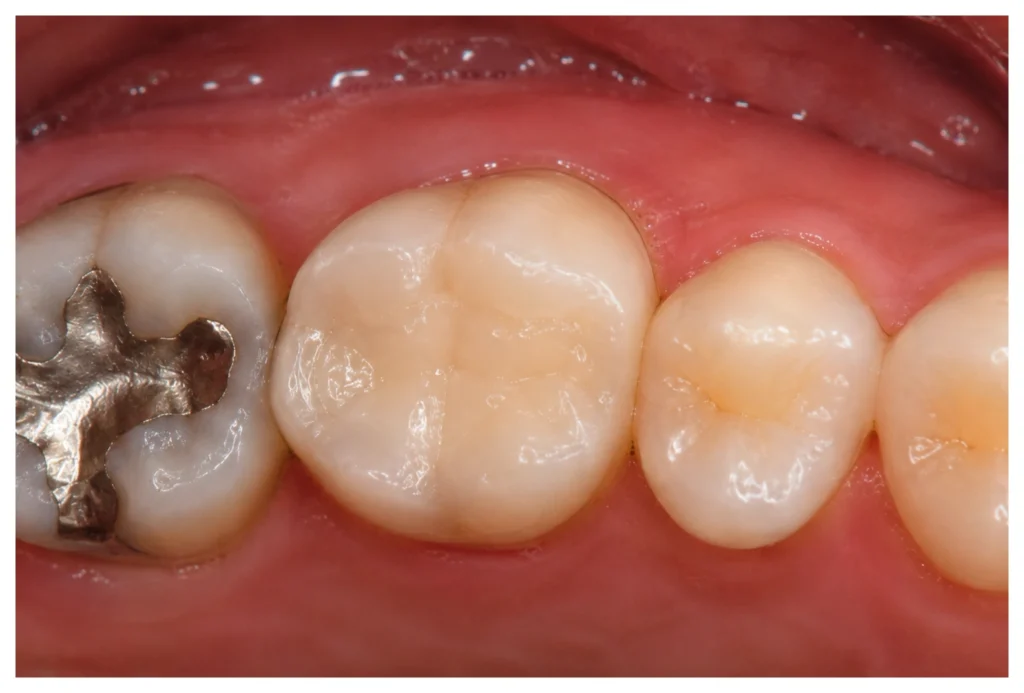
An inlay is a restorative treatment in which decayed tooth structure is removed, a restoration is custom-made to fit the remaining tooth structure, and then bonded to the tooth.
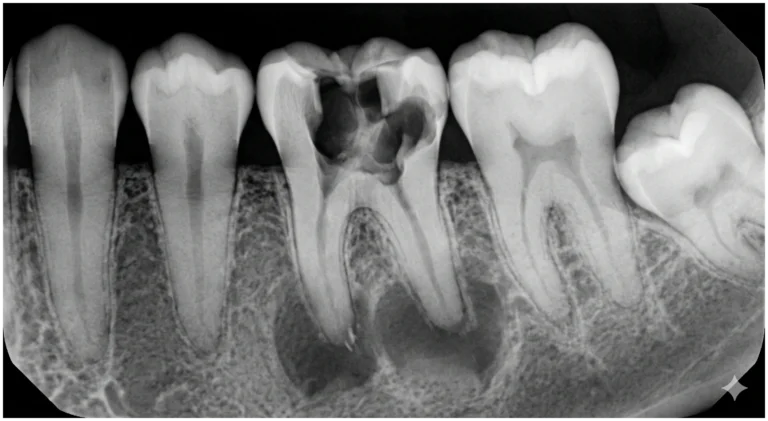
Depending on the extent and location of the cavity and how much healthy tooth structure remains, direct restorations such as composite resin may be appropriate, while an indirect restoration such as an inlay may also be considered.
Therefore, rather than assuming that “every cavity requires an inlay,” it is important to first evaluate the extent of the decay and the overall condition of the tooth.
If the cavity has progressed to some extent or is located in an area that receives significant chewing forces, it is important to consider not only the size of the cavity but also the remaining tooth structure and the bite.
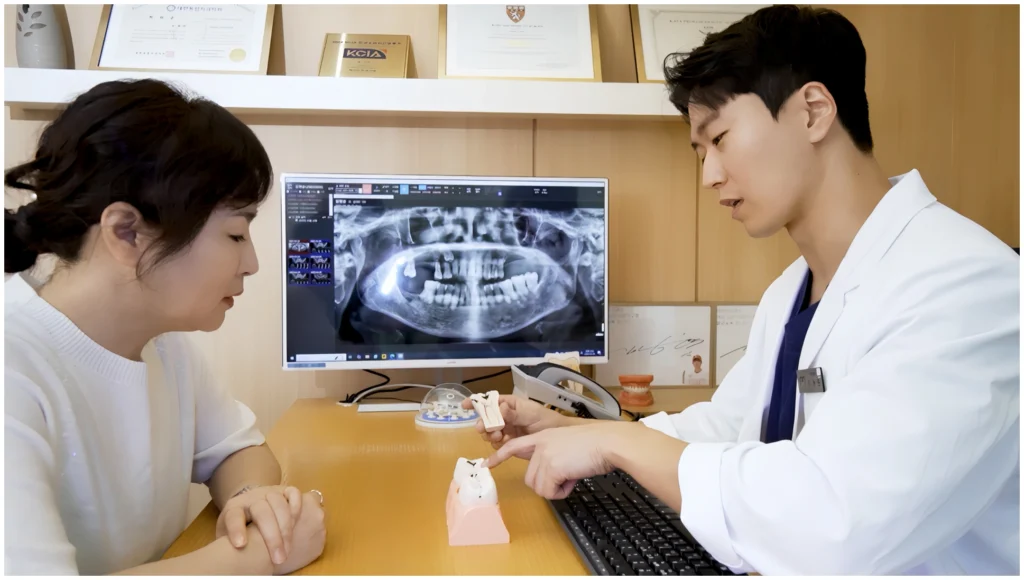
If an Inlay Falls Out, Should It Be Checked Even If There Is No Pain?
Some people assume that if an inlay falls out but there is no pain, they can simply leave it as it is.
However, the absence of pain does not necessarily mean that there is no problem with the tooth.
Food can easily become trapped in the area where the inlay has fallen out, and the tooth may become more sensitive to external stimuli. Depending on the condition of the remaining tooth structure, additional damage may also occur.
In clinical practice, some patients say, “It fell out a few days ago, but it didn’t hurt, so I just left it.” In such cases, we check not only the condition of the dislodged inlay but also whether recurrent decay has developed inside the tooth, whether the tooth has fractured, and whether the existing inlay can be reused.
If the inlay has not been damaged, bringing it with you to your dental appointment may be helpful. However, whether the existing inlay can be reused should be determined after examining both the tooth and the restoration.
In the meantime, it is advisable to avoid chewing hard or sticky foods on that side and have the tooth examined as soon as reasonably possible.
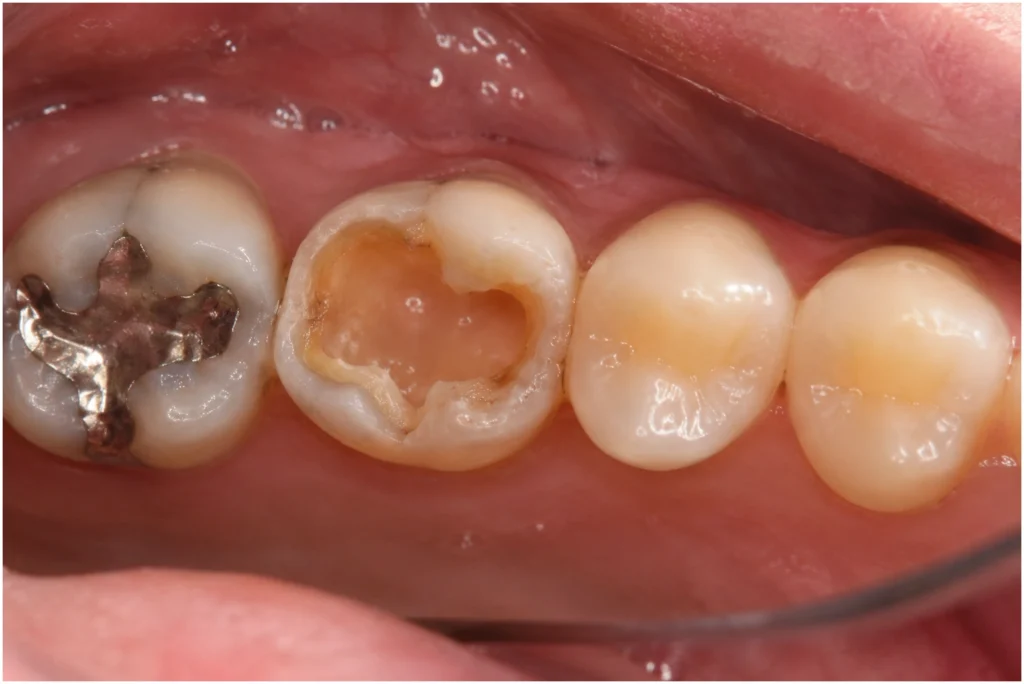
Why Does an Inlay-Treated Tooth Feel Sensitive When Chewing?
Immediately after inlay treatment, a tooth may temporarily become more sensitive to cold or hot foods and drinks.
This can occur because the internal tissues of the tooth may be temporarily irritated during the treatment process.
However, if the symptoms continue over time or repeatedly occur in the following ways, the tooth should be checked again:
- Pain repeatedly occurs in the same tooth when chewing
- Pain occurs when chewing in a particular direction
- Sensitivity to cold foods or drinks continues
- The pain becomes worse over time
- A throbbing sensation occurs even when the tooth is not being used
These symptoms do not necessarily mean that there is a problem with the inlay.
There may be various causes, including a high bite, the natural sensitivity of the tooth, the depth of the original cavity, a crack in the tooth, or the condition of the dental pulp.
Therefore, it can be helpful to explain when the symptoms started, what situations trigger the pain, and how long the pain lasts.
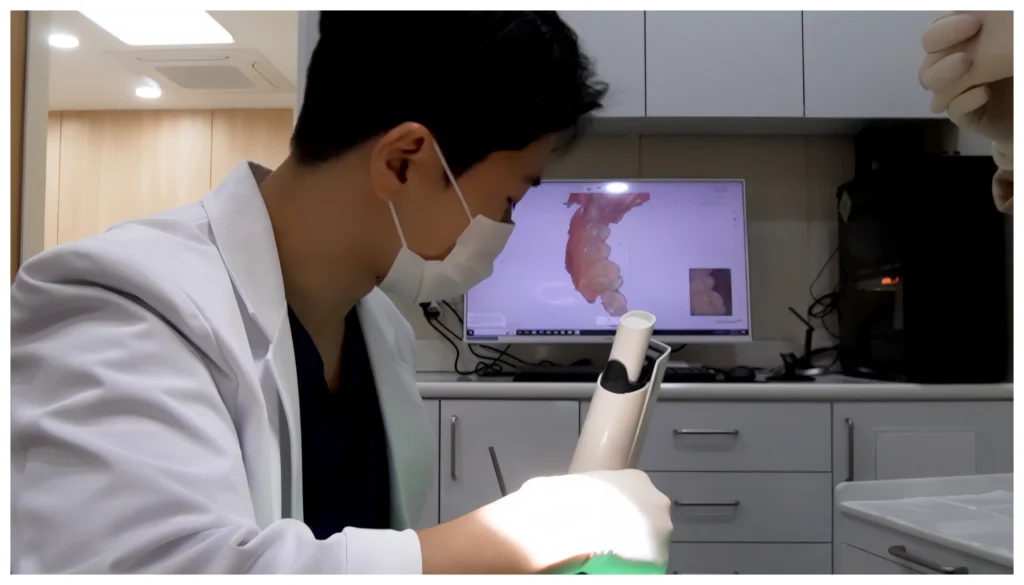
Does Food Getting Stuck Around an Inlay Mean That It Needs to Be Replaced?
After receiving an inlay, some people notice that food becomes trapped more frequently than before or that dental floss repeatedly catches in a particular area.
However, food impaction alone does not necessarily mean that retreatment is required.
The contact relationship between the inlay and the tooth, the fit of the restoration, its relationship with neighboring teeth, and the condition of the gums should all be evaluated together.
In particular, if dental floss repeatedly tears or catches, or if food repeatedly becomes trapped in one area and the surrounding gums become swollen, a dental examination may be advisable.
On the other hand, if there is no underlying problem, proper flossing and oral hygiene may be enough to reduce the discomfort.
Ultimately, whether retreatment is necessary should be determined after evaluating the overall condition of the tooth and restoration rather than based on a single symptom.
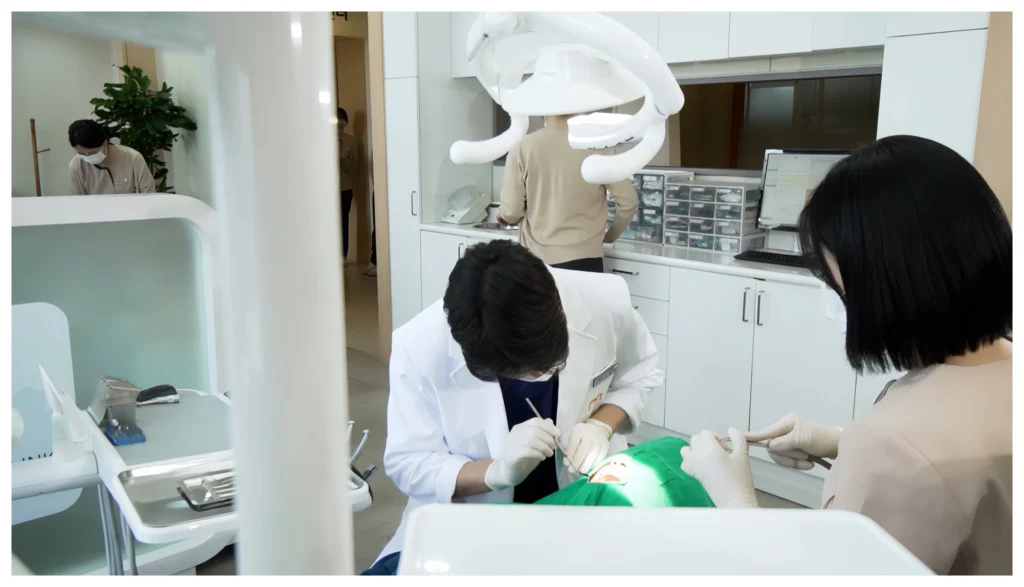
What Is the Inlay Treatment Process?
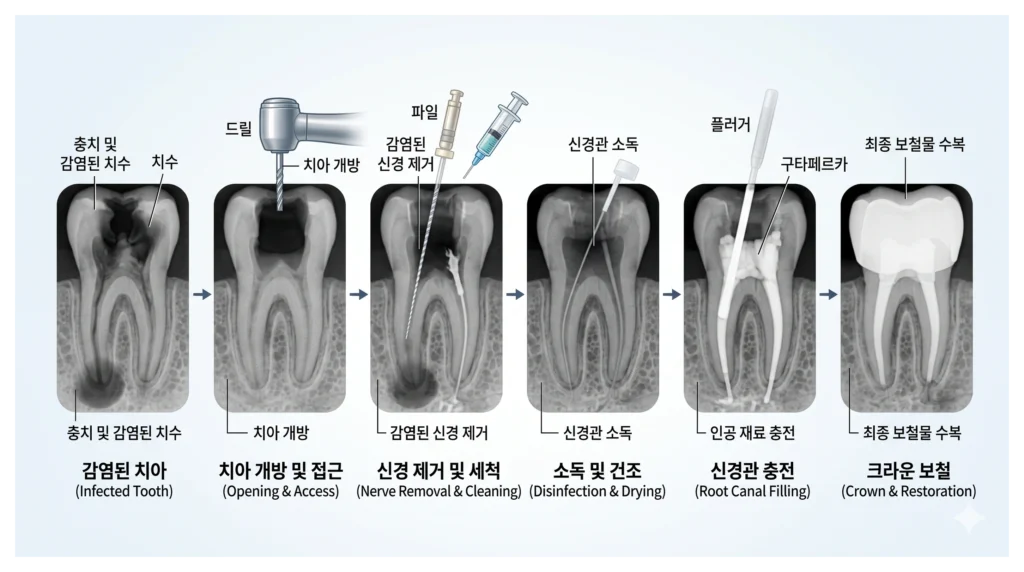
Although the process can vary depending on the condition of the tooth, a typical inlay treatment may proceed as follows:
1. Evaluation of the tooth
The dentist evaluates the extent and depth of the cavity, the remaining tooth structure, and how close the decay is to the dental pulp.
2. Removal of decay and preparation of the tooth
The decayed portion is removed, and the tooth is shaped so that the inlay can fit securely.
3. Recording the shape of the tooth
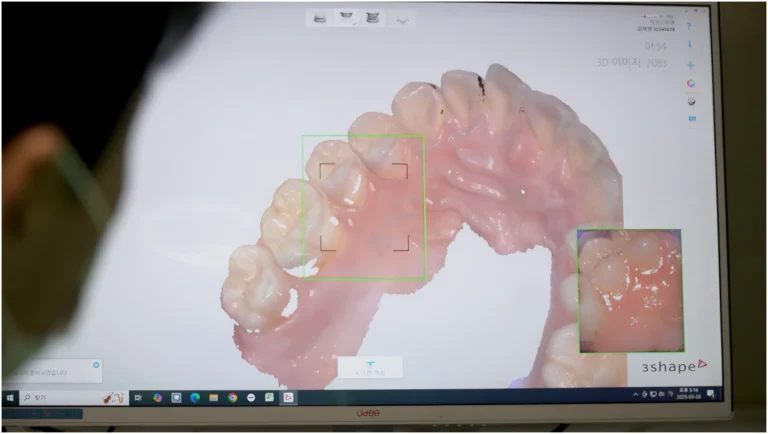
Traditional dental impressions or an intraoral scan may be used to obtain the information needed to fabricate the restoration.
4. Fabrication and placement of the inlay
The completed inlay is fitted to the tooth, bonded in place, and checked for proper bite and occlusion.
The number of visits and specific steps may vary depending on the condition of the tooth, the material used, and the treatment approach of the dental clinic.

What Should You Consider When Eating After Inlay Treatment?
If you are still numb from local anesthesia immediately after treatment, it is safer to wait until normal sensation returns before eating to avoid accidentally biting your lips or cheeks.
It is also advisable to avoid foods that are particularly hard or sticky immediately after treatment.
If a temporary material has been placed, avoiding tough or sticky foods on that side can help prevent excessive stress on the treated area.
Even after the final inlay has been placed, it is advisable to avoid excessive chewing forces at first and pay attention to how the tooth feels when you bite.
When Should You Not Delay a Dental Examination?
Because the level of pain varies from person to person, it is difficult to determine the severity of a dental problem based solely on how mild the pain feels.
If any of the following changes continue to occur, it may be a good idea to have the tooth examined:
- An inlay has fallen out and remains out
- The same tooth repeatedly hurts when chewing
- The tooth has become sensitive to cold or sweet foods
- Food repeatedly becomes trapped in a particular area
- Dental floss repeatedly catches or tears
- The edge of the restoration suddenly feels rough
- The frequency or intensity of tooth pain has increased
In particular, if the pain is becoming progressively worse or is accompanied by throbbing pain at rest or swelling of the gums, it is important to distinguish these symptoms from ordinary sensitivity following treatment.
The Most Important Factor in Inlay Treatment Is Not the “Amount of Pain”
When evaluating the condition of a tooth before or after inlay treatment, it is important to consider not only “How much does it hurt?” but also “When did it start?” and “In what situations does it repeatedly occur?”
An inlay can fall out without causing pain, while a tooth that reacts sensitively to a minor stimulus does not necessarily have a problem with the restoration.
In some cases, the condition of a tooth cannot be accurately determined simply by looking at it.
Therefore, if you are considering inlay treatment, it is helpful to first check the extent of the cavity, the condition of the remaining tooth structure, and which restorative option is appropriate. If a tooth that has already received an inlay develops new symptoms, recording the pattern of those symptoms and explaining them during your dental visit can also be helpful.
When consulting a dental clinic in Ansan Seonbu-dong about inlay treatment, it can be useful to ask not only, “Do I need an inlay?” but also about the current condition of the tooth, why treatment is necessary, whether other restorative options can be considered, and which symptoms should be monitored after treatment.
Even when the same type of restoration—an inlay—is used, the treatment process may vary depending on the depth and location of the cavity and the structure of the tooth. The appropriate treatment method and whether retreatment is necessary should be determined by a dental professional based on an oral examination and any necessary diagnostic tests.
Frequently Asked Questions
Q. My inlay fell out, but it doesn’t hurt. Can I leave it as it is?
Even if there is no pain, the exposed area may be vulnerable to external stimuli and food becoming trapped. It is advisable to have the tooth checked. If you still have the dislodged inlay, bringing it to your appointment may also be helpful.
Q. Can a tooth become sensitive after inlay treatment?
Temporary sensitivity can occur immediately after treatment. However, if the symptoms persist or become increasingly severe, other causes such as the bite or the condition of the tooth itself should be evaluated.
Q. Does an inlay need to be replaced if food keeps getting trapped around it?
Food impaction alone is not enough to determine whether retreatment is necessary. The fit of the restoration, contact with neighboring teeth, the presence of recurrent decay, and gum health should all be evaluated.
Q. Can I eat immediately after inlay treatment?
If you are still numb from anesthesia, it is advisable to wait until normal sensation has returned before eating. It is also helpful to avoid hard or sticky foods immediately after treatment.
Q. Do I need cavity treatment even if I have no pain?
Cavities can progress even without causing pain. Whether treatment is necessary should not be determined solely by the presence or absence of pain. The extent of the cavity and the overall condition of the tooth should be evaluated together.